
A False Father
Confessions from the Manosphere

Without a Head
Jordan Peterson ignited something within me - a search for a father. I knew that I couldn’t just follow an internet avatar, but I needed real world men in my life. I needed a mentor as a father I could look up to. Finding a Father would be like finding home.
In the warm and soft years of my childhood, I remember thinking that my biological father was a perfect man. He could really do nothing wrong. Puberty and the storms of my teenage years put an end to that. What had been a deep accept of all my father offered me, turned into withdrawal and instinctive rejection of his ideas and thinking.
From leaving my parents home and up until my early 30’s I thus lived a life with no head, no father, no mentors. I didn’t need it. I had cast off the silly superstitions of my Christian roots. Having received my inheritance, a strong sense of discipline and industriousness from my upbringing, I was intelligent, capable and ambitious. Anything I didn’t know already, I could easily learn. Sure, there were times when I could learn from other people. But I took a particular pleasure in outdoing my teachers.
Then, as I reached my 30s, I think that I stared to sense that there was a maturity that I was lacking. I had heard the word mentor, and realised that there was something very maturing about becoming a student of a teacher of life.
Shaking Hands with a Foreign Father
That was the time that I met Richard Piper (not his real name).
I remember that first meeting with Richard in 2014 at The Borderland, the hedonistic Scandinavian Burning Man festival I was helping to organise. Richard appeared on a gravel road, like he’d materialized from the dust itself. His handshake wasn’t just firm—it seemed to transmit something magnetic. When he looked at you, really looked, the rest of the world dimmed. The air around him felt charged, dense with possibility.

I only found out later that he was a celebrity and television personality in Sweden. Six months later, in a Burner meetup at a Swedish castle, Richard turned to me in front of thirty people: “Paul, I want to invite you to come to visit me in Stockholm. We are going to take MDMA together. I think we could unlock something powerful.”
The room watched, waiting. I felt the pressure of collective expectation, but also genuine curiosity. Everyone I consulted afterward encouraged me—”Richard’s invitations are rare,” “He sees something in you,” “This could be a key for you.”
Being Joined
Two months later, at Richard’s apartment in Stockholm, as the MDMA dissolved the walls I’d built through a lifetime of conditioning, his theories about tribal masculinity hit me like dark revelation. Men needed a tribe of brothers, not just friends. We needed rituals, priests, warriors, secret monk orders, oaths of loyalty. We’d been domesticated, turned into productivity machines and pleasant partners, but underneath lived something wild and necessary. We needed to stop playing nice and unleash our power.
“You get it,” Richard said, leaning forward, his eyes bright with chemical enhancement and genuine excitement. “Most men are too afraid to even look at what we’re discussing.”
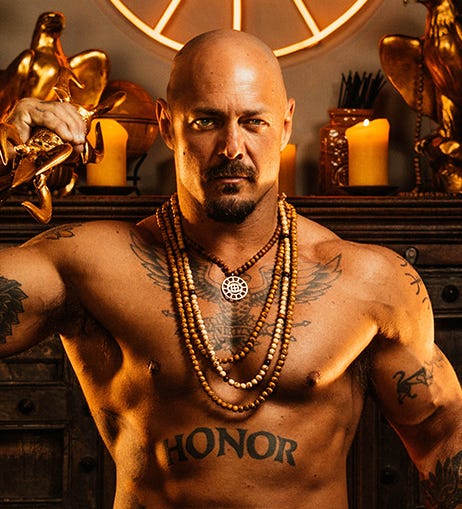
Everything he said felt like permission—to form deep bonds with other men, to acknowledge the competitive drives I’d been taught to hide, to be assertive without apology. After years of suffocating in nice-guy personas, here was a framework that explained my discontent.
The New Family
We started organizing immediately. Research weekends where we’d gather the sharpest men we knew, dissect the crisis of modern masculinity, build something new. I wrote the manifesto that emerged from those sessions, my fingers flying across the keyboard, powered by a sense of purpose I’d never felt in my Microsoft office.
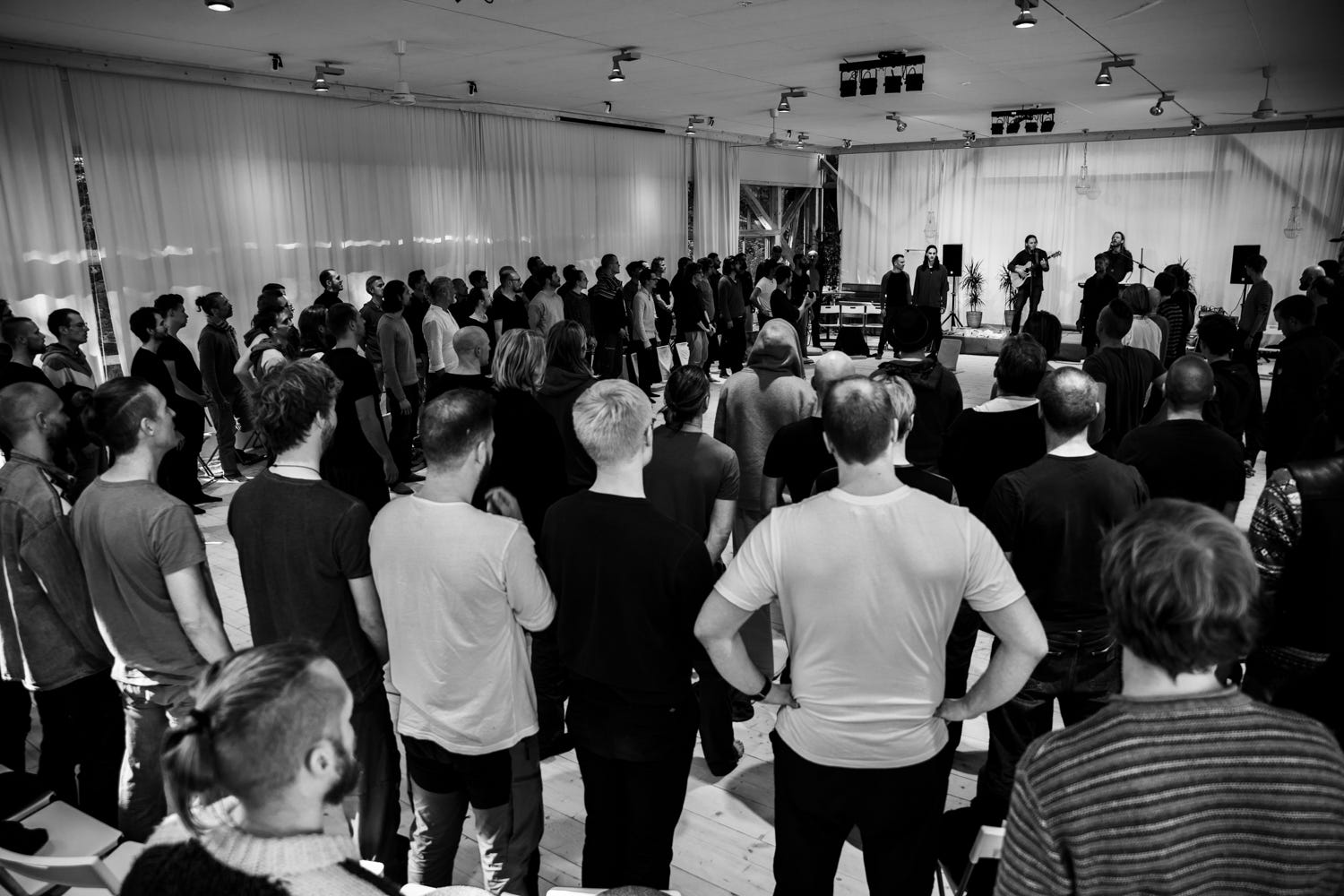
The timing was perfect, across the Atlantic, Jordan Peterson was just hitting headlines with his opposition to Bill C-16. So the response overwhelmed us. Hundreds of men, hungry for exactly what we offered. What began as Richard’s idea, filtered through my writing and organizational skills, became a movement. The Nordic Men’s Gathering in 2017 was our crown jewel—a hundred and forty men ready to do the work.
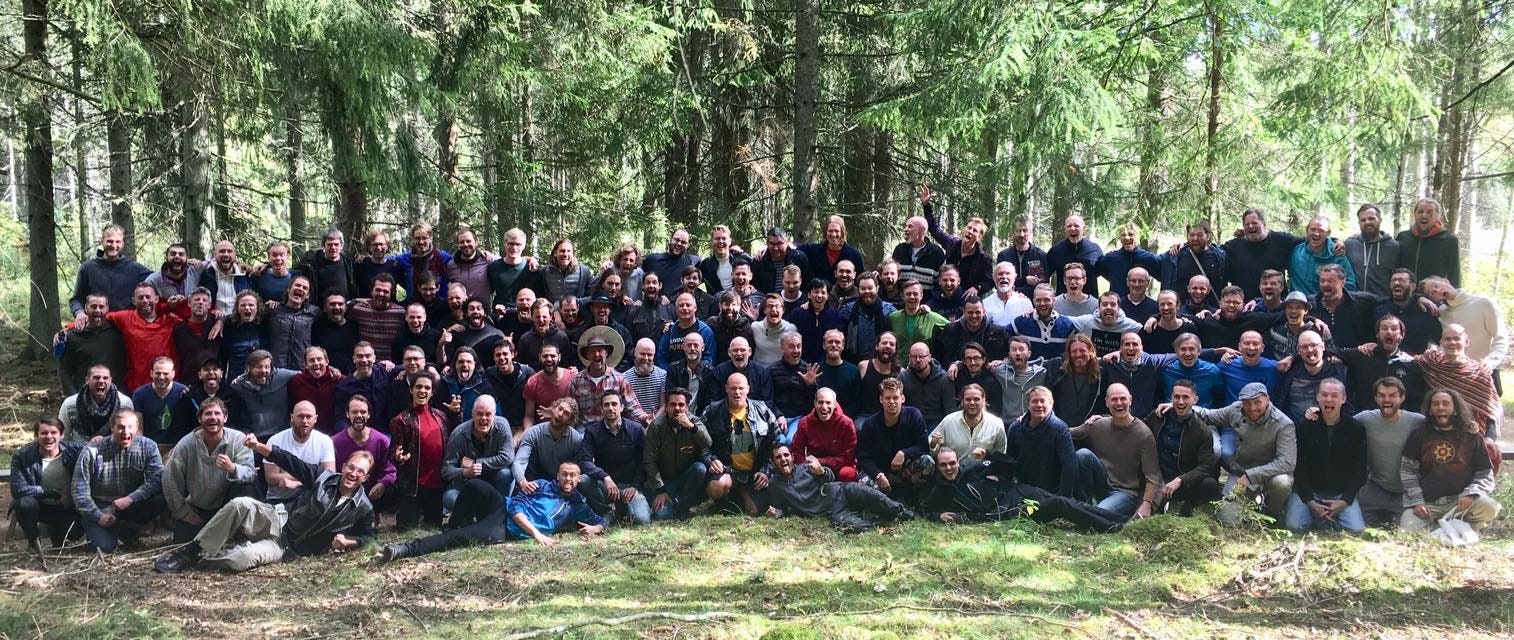
Now, at the Gathering, one of our team leaders, Marcus, stands at the edge of our circle, arms crossed, jaw clenched. Just yesterday at the opening ceremony of the Gathering, he’d grabbed the microphone with tears in his eyes: “I would take a bullet for each and every one of you brothers.” He felt too emotionally unstable to me, so I had reduced his speaking time. Now were hearing word that he’s gossiping, whispering criticisms, creating an undercurrent that threatens to poison the entire event.
Manly Boundaries
Richard catches my eye across the lunch tent. That single glance communicates everything—we both know this needs handling. He moves through the crowd with the same fluid confidence I first witnessed at Borderland festival two years earlier.
“Marcus, walk with us,” Richard says. Not a request. Marcus follows us outside, his defiance already softening under Richard’s steady gaze.
“What’s really going on?” Richard asks once we’re alone by the forest edge. Direct, no judgment, just presence. This was what initially drew me to him—this ability to cut through bullshit while making you feel seen.
“I’m just trying to share my truth and be authentic,” Marcus finally says, his voice a mixture of defiance and hurt. “Everyone else gets to share their wisdom, but I’m pushed aside. It’s the same story everywhere I go.”
Richard places a hand on his shoulder. That touch I remember, the one that makes you feel chosen. “I see you, brother. We all do. But this event isn’t about you. Right now, we need to think of the other 139 men here.”
Richard is reasonable and compassionate. But first of all, he is firm. Manly. “We are going to have to ask you to leave. I will call you as soon as I get back home next week and we can talk it all through. But right now, you have to leave.”
Marcus’s looks up at Richard. I am amazed—there is gratitude on his face. Somehow Richard has thrown him out, and created a new personal fan in the outcast at the same time.
One hour later, Marcus’ bag is packed, his car gone from the parking area.
After this, I feel a surge of admiration for Richard’s decisive leadership. He’d done what needed to be done without hesitation, preserving the integrity of our gathering, and ensuring that Marcus would not bad mouth us when he got home. This was exactly why men followed him, this was why me and him were the perfect partners—he could teach me to make the hard calls that other men avoided.
Family Habits
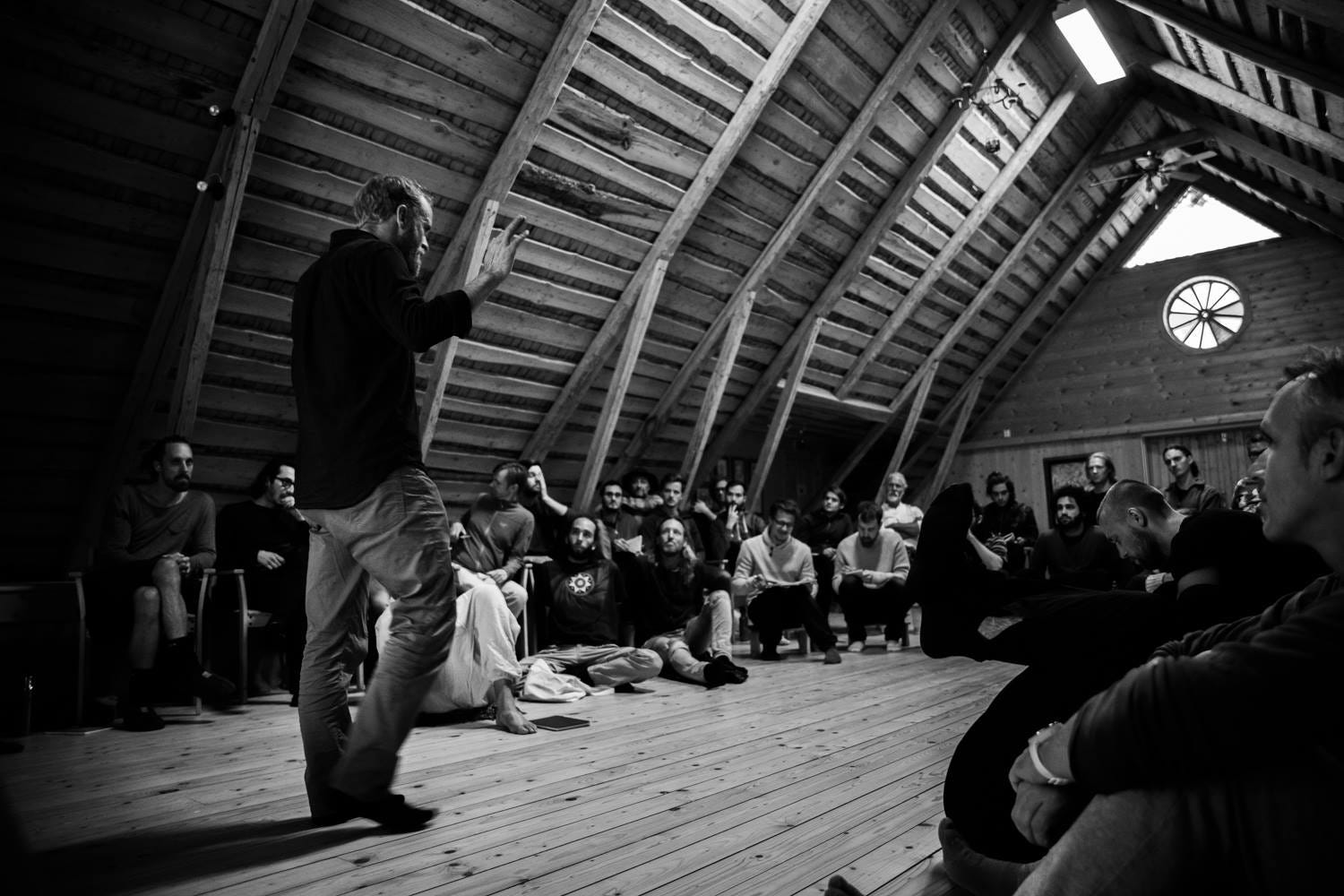
But patterns emerge if you’re watching. The morning after our MDMA journey, Richard had barely looked up from his laptop. “Brother, urgent emails,” fingers tapping out a message. Later, I wondered if it was because I hadn’t given him what he was really seeking. I started noticing how his intense focus would shift—always onto someone newer, younger, more eager to please. The way certain men would glow under his attention for months, then suddenly find themselves on the outside, wondering what they’d done wrong.
“It’s just because there are so many people he wants to help,” I’d tell myself. “He gives what each man needs. I shouldn’t be selfish.”
Watching Richard Piper now work the lunch area, I notice how he spots and goes directly at a young man from Norway who asked a particularly vulnerable question the day before. Soon they are separated from all the other men and the young man is clearly getting emotional under Piper’s attention.
Ok, so it seems Piper has a thing for young guys. I know that he had been a spokesperson for the LGBT movement in Sweden. He calls himself “queer” and tells everyone that he “lives with men and sleeps with women”. Everything I have seen so far seems to indicate that really keeps women at arms length and is on a constant hunt to seduce young men.
But who was I to police his desire? I had, at that stage, firmly adopted the ethical system of the mainstream elites of the day. Human sexuality came in all kinds of flavours and colours. As long as sex was kept between consenting adults, then all was good.
But as I watched that young guy looking up at him, something deeper than my present ethics moved in me.
I had built this. I had written the manifesto. I had organised the logistics, answered the emails, stood on that stage in front of a hundred and forty hungry men and told them they had found a home.
And then this man I had built it with, the man I had cast as father, as elder, as the visionary of the movement. I needed him. He had the reach and the celebrity that was necessary to get this thing moving. But what was it exactly that he was looking for in all this?
I didn’t let the question finish forming. Not yet. I wasn’t ready for where it led.
To follow that question, please hit subscribe - this is going to be a three-part series of “Confessions From the Manosphere”.
I wonder if youve given away the identity in the article.
I think in these spaces any type of sexual prefence should never motviate or influence the behaviour of anyone, letalone the person in the position of trust. But, alas, as has been said, eveything is about sex except sex, thats about power.
With respect to what you have shared, Jesus introduced the ideal father when he taught the Lord's prayer: "Our father, who art in heaven" I am a father of 4. I was not the ideal father. I wish I was. My own father was not the ideal father either. Although, before he died we reconciled, and I can say he truly was a great man, all of us fathers fall short of the ideal we have in our minds I am sure. I suppose it is important to embrace the ideals, recognize and admit our short comings, and know that we try our best to live between the poles as closely to the ideals as we can: Admiring our stumbles, repenting of our sins, and asking for Grace to make to make us great fathers one day.